

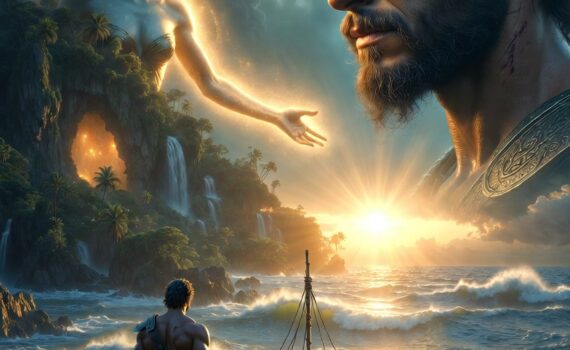
Odysseus and the Rejection of Immortality: The Most Powerful Lesson for Entrepreneurs Seeking to Build a Meaningful Life
Category:Business ManagementIn a world obsessed with comfort, guarantees, and “easy success,” the story of Odysseus on the island of Ogygia stands as one of the deepest and most subversive moments in Western literature. An exhausted castaway, scarred by war and years of wandering, rejects a goddess’s offer: immortality, eternal youth, endless pleasure, and a paradise without needs. His response not only silences Calypso but continues to resonate as a manifesto for anyone who truly aspires to become an entrepreneur.This article, oriented toward entrepreneurship, draws practical, psychological, and strategic principles from the episode in The Odyssey (Book V and beyond) for founders, freelancers, intrapreneurs, and anyone considering leaving the “safe island” to sail toward their personal Ithaca: a business, a project, or a life aligned with purpose.1. Calypso: The Cage That Looks Like Paradise (The Trap of Entrepreneurial Comfort)The name “Calypso” comes from the Greek verb kalýptein, meaning to hide, cover, or conceal. Ogygia is not a prison with bars; it is a sensory paradise: caves covered with vines heavy with grapes, four springs of crystal-clear water, meadows of violets, fragrant cedar, and singing birds.For the modern entrepreneur, Ogygia takes many forms:
- A well-paid corporate job with benefits, bonuses, and “flexible” hours (but without real autonomy).
- A “comfortable” business that generates enough passive income to live well, but without growth or impact.
- A saturated niche where you compete for scraps instead of creating a market.
- Procrastination disguised as “perfectionism”: waiting for the perfect idea, the perfect moment, or perfect funding.
Odysseus has been there for seven years. Seven years without physical chains, but imprisoned by perfect routine. Every morning, while Calypso sleeps, he sits on the shore and cries, staring at the empty sea. “The sweet life was slipping away from him as he wept for his return.”Key Lesson for Entrepreneurs: Comfort does not hurt immediately. It hurts slowly, eroding your agency, your story, and your identity. Many startups fail not because of fierce competition, but because their founders never truly left Ogygia mentally. They continue operating with an employee mindset: seeking security, avoiding visible risks, and measuring success by stability rather than meaningful progress.Ask yourself: Are you in Ogygia? Is your “current success” hiding your real potential? The first step in true entrepreneurship is recognizing the cage, even if it smells of cedar and tastes like nectar.2. The Offer of Immortality: The Trade-off No One Wants to SeeCalypso does not lie. She offers eternal youth, a goddess’s love, and total absence of worries. “If you knew how many misfortunes await you at sea… you would stay here with me, immortal.”Her comparison with Penelope is masterful: “Is your mortal wife really better than me? Mortals cannot compete with goddesses in form or beauty.”Odysseus’s response is masterful in its maturity:
“Revered goddess, do not be angry with me. I know full well that wise Penelope is inferior to you in presence and beauty, for she is mortal and you are immortal and do not age. Yet still, I desire and long every day to return home and see the day of my return.”
He does not dispute the facts. He acknowledges the goddess’s objective superiority… and still chooses his mortal life. That is entrepreneurship in its purest form.Practical Application:In entrepreneurship, you constantly face similar trade-offs:
- Do you accept investment that dilutes your control (financial immortality) but takes away your freedom?
- Do you stay in a comfortable market with decent margins or venture into open waters where you can build something legendary?
- Do you prioritize a lifestyle business (Ogygia) or a legacy business (Ithaca)?
Great entrepreneurs choose the second option, knowing storms will come. Elon Musk left comfortable positions to found SpaceX and Tesla despite high failure probabilities. Jeff Bezos left Wall Street. They could have lived like “gods” on their island. They said no.Entrepreneurship is not about maximizing pleasure or minimizing pain. It is about choosing a narrative worthy of being told, even if it includes shipwrecks.3. Building the Raft with Your Own Hands: The Execution PhaseAfter agreeing to leave Ogygia, Calypso fulfills her word: she gives him a double-edged bronze axe, shows him the best trees (poplars and well-dried firs that float well), and Odysseus spends four days cutting, smoothing, assembling, and caulking his own raft. She provides provisions, wine, water, perfumed clothes, and teaches him to navigate by the stars.Powerful Metaphor: No one takes you on a yacht when you leave your comfort zone. You depart on a raft you built yourself, with basic tools and knowledge gained along the way.Equivalent stages in entrepreneurship:
- Cutting trees: Market research, idea validation, skill acquisition.
- Smoothing and assembling: MVP development, first sales, iteration.
- Caulking: Ensuring no leaks (finances, operations, initial team).
- Navigating by stars: Using timeless principles (stoicism, unit economics, customer obsession) when there is no GPS (perfect data).
Many “entrepreneurs” want someone else to build the raft. Odysseus does not. The very act of building it is part of the transformation. Deliberate manual effort rebuilds his agency after seven years of passivity.4. Poseidon’s Storms: The Inevitability of SufferingHe sails calmly for seventeen days. Then Poseidon sees the raft and unleashes the storm. The raft breaks apart. Odysseus swims for two days and two nights, washes up naked and swollen with salt, and buries himself under dry leaves like an ember under ashes.This is the reality that “start a business in 30 days” courses hide: the sea punishes those who dare to sail.In entrepreneurial terms:
- Failed product launches.
- Key clients leaving.
- Investors pulling out.
- Burnout, cash flow problems, aggressive competition, regulatory changes, economic crises.
Odysseus does not choose Ithaca believing it will be easy. He says explicitly: “If some god strikes me again on the dark sea, I will endure it, for my heart already knows how to suffer. I have endured so many things in the waves and in war; let one more come.”Stoic Principle Applied to Entrepreneurship: Do not ask for things to happen as you wish. Wish for them to happen as they do, and you will go well. (Epictetus and Marcus Aurelius drew from this Homeric source.)Resilient entrepreneurs do not avoid storms; they develop “sailor’s skin.” They cultivate antifragility (Nassim Taleb): each blow makes them stronger.5. Modern Ogygia: How to Detect If You Are HiddenSigns you are in your own Ogygia:
- Stable income but no sustained growth above 15-20% annually.
- Fear of “burning it all down” even though the project excites you.
- Comparing your Chapter 3 to someone else’s Chapter 20 (social media).
- Justifying inaction with “responsibilities” (family, mortgage) while ignoring that true responsibility is modeling courage.
- Feeling an existential void on Sunday nights despite “having it all.”
Recognizing it is painful but liberating. Odysseus cried every day. That crying was proof he was still alive.6. The Return as Legacy BuildingIthaca is not just “going home.” It is reclaiming your kingdom, your identity, your story. Penelope, Telemachus, the suitors: there is narrative, relationships, conflict, and growth.In entrepreneurship, your Ithaca can be:
- A company that employs dozens or hundreds and transforms an industry.
- A product that solves a real pain for thousands.
- A lifestyle that combines financial freedom with impact and family.
- A personal brand that inspires others to leave their own Ogygias.
The journey itself forges character. Odysseus does not return as the same man who left for Troy. He is wiser, more human, and more cunning.7. Practical Tools Derived from the Story for EntrepreneursA. Ogygia Audit (Weekly Exercise)
Answer honestly:
- What comfortable paradise am I enjoying that is hiding me?
- What “goddess” (comfort, ego, fear of failure) is offering me immortality in exchange for my story?
- If I rejected it today, what raft would I have to build tomorrow?
B. Odyssey Declaration
Write your version of the response to Calypso. Acknowledge the advantages of staying… and choose your path anyway. Read it when storms arrive.C. Morning Crying Routine (Adapted)
Spend 10-15 minutes daily looking at your “sea”: visualize your vision, review key metrics, feel the distance between where you are and where you want to be. That longing is fuel.D. Team and Mentors as Hermes and Athena
Odysseus does not succeed alone. Athena advocates in the assembly of gods. Hermes delivers the order. Seek allies, mentors, and communities that accelerate your departure.E. Operational Stoicism
- Control what you can control (effort, values, iteration).
- Accept what you cannot control (market, timing, competition).
- Focus on virtue: resilience, ingenuity, integrity.
8. Real Cases of Entrepreneurs Who Said “No” to Calypso
- Sara Blakely (Spanx): Rejected corporate sales comfort, invested her savings, and faced constant rejections.
- Brian Chesky (Airbnb): Sold cereal to survive and rejected early acquisition offers.
- Latin American founders who left multinational jobs to build in volatile economies.
- Bootstrapped founders who prefer slower but controlled growth over quick equity sales.
All faced their own Poseidon. All built imperfect rafts.9. The Cost of Staying vs. The Cost of LeavingStaying in Ogygia has a very high hidden cost: regret, accumulated mediocrity, loss of agency, diluted legacy.Leaving has visible costs: uncertainty, effort, possible public failures. But it also brings returns: compounded growth in character, skills, networks, and eventually material rewards.Odysseus arrives naked on the next shore. But he is moving. That is what matters.10. Conclusion: Your Ogygia Is Waiting… for You to Leave ItThe most mature lesson of Antiquity is not to endure suffering for its own sake. It is to consciously choose a life with storms because only in them can you build a story worth telling and a character worth having.Entrepreneurship is not a hobby or a search for easy wealth. It is a Homeric journey: leaving the beautiful but sterile island, building with your own hands, navigating by stars, enduring waves, and eventually reclaiming your kingdom.Today, the goddess makes the offer again. The digital paradise, the fixed salary, the comfortable niche, the “it’s good enough.”What will you answer?If you choose Ithaca, start small: identify one concrete action this week that cuts a tree for your raft. Publish your first content, contact your first potential client, validate your idea with 10 real conversations, or quit that distraction keeping you hidden.The sea is dangerous. But Ogygia is living death.Odysseus, the man of a thousand tricks, the one who endures everything, chose the difficult path. Millions of anonymous entrepreneurs do it every day. You can too.The uncomfortable question this episode leaves is not “Why did Odysseus say no?” It is: What island are you living on? And more importantly: When do you start building your raft?