Category Archives: Artificial Intelligence

  • 0

Introduction to Large Scale Language Models (LLM)

Category:Artificial Intelligence,Programming Tags : 

1. Introduction

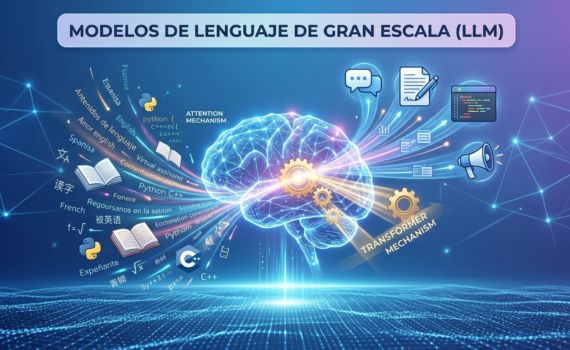
Large-Scale Language Models (LLMs) have represented one of the most significant advances in the field of artificial intelligence (AI) in recent years. These models are primarily based on deep neural networks, which has given them the ability to understand, generate, and manipulate human language with unprecedented accuracy and versatility. From virtual assistants like ChatGpt, Grok, Gemini, and DeepSeek to code-generating tools like Claude, text-summarizing tools, and even creative storytelling tools, LLMs are transforming the way we interact with technology.

In this article, we will explore what LLMs are, how they work, their practical applications, limitations, and the impact they are having on society. We will break down the technical concepts in an accessible way, provide practical examples, and discuss the future of this technology. This article is designed to be clear, concise, and didactic, with a focus on helping readers understand both the fundamentals and implications of LLMs.

2. What is a Large-Scale Language Model?

An LLM is a type of artificial intelligence model designed to process and generate text in natural language. These models are trained on vast amounts of text data (often billions of words) to learn linguistic patterns, grammatical structures, facts, and, to some extent, reasoning. LLMs are typically deep neural networks based on architectures like Transformers, which allow them to capture complex relationships between words and phrases.

Example 1: How does an LLM answer a question? Imagine you ask an LLM: What is the capital of France? The model doesn’t consciously “know” the answer, but it has been trained on millions of documents that mention Paris as the capital of France. By processing your question, the model predicts the most likely answer: “The capital of France is Paris.”

Main characteristics of LLMs:

  • Massive scale: Trained on enormous datasets (such as books, articles, websites, etc.).
  • Generalization ability: They can perform multiple tasks, from answering questions to translating languages ​​or writing poetry.
  • Context: They are able to maintain context in long conversations or extensive texts.
  • Text generation: They can produce coherent and relevant text, such as stories, essays, or code.

3. How do LLMs work?

To understand how LLMs work, it is important to break down their key components: architecture, training, and inference.

3.1 Architecture: The Power of Transformers

Most modern LLMs are based on an architecture called Transformers, introduced in the seminal 2017 article “Attention is All You Need” by Vaswani et al. Transformers are particularly efficient at modeling the relationships between words in a sequence, thanks to a mechanism known as attention.

The attention mechanism allows the model to focus on the most relevant parts of a sentence or text when processing it. For example, in the sentence “The cat on the roof is black,” the model can identify that “cat” and “black” are related, even if they are separated by other words.

Example 2: Attention Mechanism in Action

Suppose a Language Modeling (LM) is processing the sentence: Maria bought a book that John recommended. The attention mechanism will assign greater weight to the connections between “Maria,” “book,” and “John,” somewhat ignoring less relevant words like “that.” This allows the model to understand who bought what and who recommended it.

3.2 Training: Learning from the World

LMs are trained in two main phases:

  1. Pre-training: In this phase, the model is fed vast amounts of text (e.g., books, Wikipedia articles, social media posts) so that it can learn general linguistic patterns. This is done through tasks such as predicting the next word in a sentence (language modeling) or filling in missing words (masked language modeling).
  2. Fine-tuning: In this phase, the model is further trained for specific tasks, such as answering questions, translating languages, or generating code. This is done to improve its performance in those specific areas.

Example 3: Pre-training in action Imagine a Language Learning Model (LLM) being trained on the text: The sun shines in the sky. During pre-training, the model might be tasked with predicting the word “sky” given the context “The sun shines in the.” By processing millions of similar phrases, the model learns that “sky” is a likely word in this context.

3.3 Inference: Generating responses

Once trained, the LLM enters the inference phase, where it generates responses based on the inputs.user. During inference, the model predicts the probability of each word in a sequence and selects the most appropriate one, adjusting to the provided context.

Example 4: Text Generation

If you give the model the input: Write a poem about autumn, the LLM will generate a sequence of words that form a coherent poem, such as:

Golden leaves fall slowly and bright,

the wind whispers on cold nights,

autumn paints the world calmly,

a canvas of reds and melancholy.

This is achieved because the model has learned poetic patterns and associations between words like “autumn,” “leaves,” and “wind.”

4. Applications of LLMs

Given their increasing popularity, LLMs have been implemented in a wide variety of fields. Below, we explore some of the most common ones, with practical examples.

4.1 Virtual Assistants LLMs are the basis of assistants like Gemini, Grok, and ChatGpt. These assistants can answer questions, offer recommendations, and engage in natural conversations.

Example 5: Conversation with an Assistant

  • User: How can I improve my productivity?
  • LLM: You can try techniques like the Pomodoro Technique, where you work for 25 minutes and then take a 5-minute break. Prioritizing tasks with the Eisenhower Matrix, which divides tasks into urgent and important, is also helpful.

4.2 Content Generation LLMs can write articles, stories, scripts, and more. For example, this very article could have been entirely written by an LLM or formatted by one.

Example 6: Generating a Short Story

  • Input: Write a short story about a lost astronaut.
  • Output: Astronaut Elena floated in the vastness of space, her damaged spacecraft adrift. Through her visor, the stars seemed to whisper ancient secrets. With limited oxygen, he decided to send a final message to Earth, not one of despair, but of awe at the vastness of the cosmos…

4.3 Language Translation

LLMs can translate text between languages ​​with high accuracy, often outperforming traditional translators.

Example 7: Translation

  • Input (Spanish): El amor es un lenguaje universal.
  • Output (English): Love is a universal language.

4.4 Code Generation

LLMs can write code in languages ​​such as Python, JavaScript, or C++, making them valuable to developers.

Example 8: Code Generation

  • Input: Write a Python function that calculates the factorial of a number.
  • Output: def factorial(n):
    if n == 0 or n == 1:
    return 1
    else:
    return n * factorial(n – 1)

4.5 Education and Mentoring

LLMs can explain complex concepts in a simple way, answer academic questions, and provide examples. Example 9: Explaining a Concept

  • User: Explain what relativity is.
  • LLM: Relativity, proposed by Einstein, describes how time and space are interconnected. For example, a clock on a rocket traveling near the speed of light will tick more slowly than one on Earth, a phenomenon known as time dilation.

5. Limitaciones de los LLM

However, despite their constantly growing capabilities, LLMs face significant limitations that are crucial to understand when using them.

5.1 Falta de comprensión real

LLMs don’t “understand” the world like humans do; they simply predict patterns based on data. This can lead to incorrect or absurd answers in specific contexts.

Ejemplo 10: Error de un LLM

  • Usuario: ¿Cuántos dientes tiene un elefante?
  • LLM (respuesta errónea): Un elefante tiene 32 dientes.
    Realidad: Los elefantes tienen solo 4-6 molares grandes en un momento dado, no 32 dientes como los humanos.

5.2 Sesgos en los datos

LLMs can perpetuate biases, especially those already present in the data used for training.

For example, if the training dataset contains gender stereotypes, the model could generate biased responses.

5.3 Costo computacional

Training and running LLM requires a huge amount of computational resources, making it expensive and with a significant environmental impact.
To truly understand why running an LLM is so expensive, we must differentiate between training (creating the model) and inference (using it to answer questions). While training requires months of massive computing power, inference presents a constant challenge in terms of scale and resources.
Here we break down the technical factors that increase the cost of computing:


5.3.1 Memory Consume VRAM

Unlike traditional software that resides on the disk or regular RAM, an LLM must be fully loaded into the VRAM (Video RAM) of the graphics cards (GPU) to respond quickly.

Software

  • Parámeters and Precision: A model with 70 billion parameters (70B), if executed in 16-bit precision (FP16), requires at least 140 GB of VRAM just to exist in memory.
  • Quantization: To reduce this cost, quantization techniques are used that compress the model to 4 or 8 bits, allowing it to fit on less expensive hardware, albeit with a slight loss of precision.

5.3.2 The Attention Mechanism and Quadratic Complexity

El corazón del Transformer, el mecanismo de Auto-atención, es computacionalmente “hambriento”.

  • Complexity: Attention has a complexity of O(n2), where n is the length of the sequence (the context).
  • Impact: If you double the length of the question or document that the model must read, the computational effort to process the relationships between words quadruples. This explains why models with very large “context windows” (such as 128k or 1M tokens) require massive infrastructures of interconnected GPU clusters..

5.3.3 Token Operations (Flops)

Each time the model generates a single word (a token), it must perform billions of mathematical operations (matrix additions and multiplications)..

  • Sequential Generation: Unlike a Google search, which is nearly instantaneous, an LLM generates text word by word. For a 500-word response, the model must “go through” its billions of parameters 500 consecutive times.
  • Memory Bandwidth: The bottleneck is usually not the chip’s calculation speed, but the speed at which data moves between the GPU’s memory and its processing core.

5.3.4 Infrastructure and Energy

Keeping these models available 24/7 involves enormous operating costs:

  • Elite Hardware: Specialized chips such as the NVIDIA H100 or Blackwell are required, which cost more than $30,000 per unit.
  • Electricity and Refrigeration: A single AI server rack can consume as much energy as several average homes. Furthermore, constant liquid or air cooling adds a significant extra cost.

Cost Resume: Inference vs. Training

FactorTraining(Training)Inference (Serving)
DurationMonths (only one)Continued (per user)
HardwareThousands of GPUs synchronizedDe 1 a 8 GPUs por instancia
ObjetiveAdjust the net weightsPerform calculations with fixed weights
Main CostEnergy and hardware depreciationBandwidth and latency

5.4 Hallucinations

LLMs sometimes generate false but plausible information, a phenomenon known as “hallucination”.

Example 11: Hallucinatión

  • Usuario: ¿Quién inventó el teléfono móvil?
  • LLM (respuesta incorrecta): El teléfono móvil fue inventado por Alexander Graham Bell en 1973.
    Realidad: Martin Cooper inventó el primer teléfono móvil en 1973.

This phenomenon in Large Scale Language Models (LLMs) is perhaps the most critical technical and ethical challenge facing generative AI today. We must consider that this is not a simple “software bug,” but rather an intrinsic characteristic of how these models are designed.

Next, we explore why they occur, what types exist, and how attempts are being made to mitigate them.


5.4.1 ¿Why an LLM Hallucinate?

To understand the phenomenon of hallucination, we must remember that an LLM is not a database or an encyclopedia; rather, it is a statistical token prediction engine..

  • Probability vs. Truth: The model chooses the next word based on its likelihood of appearing after the previous one, according to its training data. If the statistically most likely path is false, the model will follow it without hesitation.
  • Lack of a “World Model”: Since LLMs lack a physical or logical understanding of the real world, they don’t “know” that Alexander Graham Bell couldn’t have invented the cell phone in 1973 because they don’t understand the timeline as an absolute concept, but rather as a relationship of words.
  • Data Compression: During training, models must compress petabytes of information into a few gigabytes of parameters. During this “loss” process, specific details (dates, exact names, figures) often become blurred, creating false or mixed memories.

5.4.2 Types of Hallucinations

We can then classify hallucinations into two main categories:

  1. Intrinsic Hallucinations: In these cases, the model directly contradicts the information provided in the prompt.
    • Example: You give it a text that says “The net profit was 5 million” and the model summarizes by saying “The company lost 5 million”.
  2. Extrinsic Hallucinations: The model generates information that is out of context and factually false in the real world.
    • Example: Inventing a bibliographic citation from a famous author who never existed or creating a code function that uses a non-existent library.

5.4.3 Factors that increase the risk

  • Temperature (Creativity): When configuring the model, a high “temperature” setting will force the model to choose less likely words to be more creative, thus increasing the probability of hallucinating.
  • Confirmation bias (Sycophancy): The model will sometimes try to please the user. If you state something false in the question (“Why is the sun green?”), the model might “go along with you” and justify it.
  • Noisy training data: If the model read fake news or forums with errors during its training, it will replicate those errors as truths.

5.4.4 Mitigation Strategies: How do we solve it?

The industry is using several layers of security to “ground” the model:

  • RAG (Retrieval-Augmented Generation): It is the most effective technique. Instead of relying solely on the model’s “memory,” it allows you to search reliable external documents before responding.
  • RLHF (Reinforcement Learning from Human Feedback): Human trainers correct the model when it hallucinates, teaching it that “I don’t know” is also a valid answer and is preferable to a lie.
  • Verification Chains (CoVe): In this case, the model is asked to first generate an answer, then verify its own facts, and finally correct the original answer.

Technical Reflection:Ironically, the ability to “hallucinate” is what makes LLMs brilliant at poetry, brainstorming, and fiction. The challenge for modern engineering is to maintain creativity for artistic tasks and eliminate hallucination for precision work.


6. Ethics and social challenges

The use of LLM raises important ethical questions:

  • Privacity: The data used to train LLM may contain sensitive information.
  • Desinformation: The ability to generate convincing text can be used to create fake news.
  • Access: High-quality LLMs are often controlled by large corporations, raising concerns about equity and access.

Example 12: Ethics in content creation

An LLM could be used to create a fabricated article that appears credible, such as: Scientists discover that chocolate cures cancer. This highlights the importance of verifying sources and using LLMs responsibly.


7. Future of LLM

The LLM field is evolving rapidly. Some future trends include:

  • More efficient models: Researchers are developing LLMs that require fewer computational resources.
  • Multimodal Integration: LLMs are starting to combine text with images, audio, and other data.
  • Greater personalization: LLMs of the future could be better adapted to the individual needs of users.

Example 13: LLM multimodal Imagine an LLM that not only answers questions but also generates an image based on your description or analyzes a photo you upload. For example, you could say: Describe a beach at sunset and create an image, and the model would generate both the text and an illustration.


8. Conclusion

Large-Scale Language Models (LLMs) are a powerful tool that is redefining how we interact with technology. From answering questions to generating creative content or assisting with complex tasks, LLMs have enormous potential, but they also come with ethical and technical challenges. As this technology advances, it is crucial to use it responsibly and understand its limitations.

In this article, we have explored the fundamentals of LLMs, their operation, applications, limitations, and their impact on society. With practical examples, we hope to have provided a clear and instructive overview of this fascinating area of ​​artificial intelligence.


9. References

  • Vaswani, A., et al. (2017). “Attention is All You Need.” Advances in Neural Information Processing Systems.
  • Brown, T., et al. (2020). “Language Models are Few-Shot Learners.” arXiv preprint arXiv:2005.14165.
  • Sitios web de xAI y otras fuentes confiables sobre IA.

  • 0

Is it really impossible? Challenging the limits of the conceivable

Category:Artificial Intelligence,Business Management,Programming Tags : 

Stating that something is impossible may sound categorical, but in reality, it hides a much more complex truth. What is considered impossible today could be a tangible reality tomorrow. The history of humanity is littered with examples that corroborate this: from the dream of flight to the conquest of space, time and again we have challenged the limitations of our knowledge and technology to achieve what was previously considered improbable.

The Development of Knowledge and Technology: Scientific and technological advances are fundamental drivers of progress. As we expand our knowledge of the universe and develop new tools, the possibilities expand exponentially. What was unthinkable yesterday becomes an everyday reality today.

Examples That Defy the Impossible:

  • Flying: In the past, the idea of ​​flying was considered a mythological fantasy. However, the invention of the airplane and the development of aviation completely transformed the way we travel.
  • Instant Communication: Long-distance communication was an unattainable dream until the invention of the telephone, radio, and the internet. Today, we can hold real-time conversations with people anywhere in the world.
  • Traveling to space: The conquest of space is an extraordinary achievement that has challenged our understanding of the universe. What was once a science fiction dream has become a tangible reality thanks to the development of rockets and space technology.

The importance of attitude and perseverance:

Claiming that something is impossible can be a mental barrier that limits our ability to innovate and progress. It is essential to maintain an open and receptive attitude to new ideas, no matter how far-fetched they may seem. Perseverance and determination are also key to overcoming obstacles and turning the impossible into the possible.

Conclusion:

Claiming that something is impossible is an act of presumption that ignores the potential of human ingenuity and scientific development. History teaches us that the limits of the possible are infinitely expandable. The key to achieving what is considered impossible today lies in the constant pursuit of knowledge, technological innovation, and an open and persevering attitude.

Remember:

  • The development of knowledge and technology expands the possibilities of what can be achieved.
  • History is full of examples that challenged the impossible and made it a reality.
  • Attitude and perseverance are key to overcoming obstacles and achieving the improbable.
  • Saying something is impossible limits the potential of human ingenuity and progress.

Dare to challenge the impossible. The future is full of possibilities waiting to be discovered.


  • 0

Boosting Productivity with ChatGPT: A Guide to Using AI for Code Development and More

Category:Artificial Intelligence,Programming Tags : 

Introduction:

In today’s fast-paced world, productivity is the key to success. However, it can be challenging to stay focused and motivated when facing a pile of tasks on your to-do list. Fortunately, AI-powered tools like ChatGPT can help you boost your productivity by assisting you with code development, brainstorming, and more. In this article, we’ll explore how you can use ChatGPT to improve your productivity and get more done in less time.

Using ChatGPT for Code Development:

As a developer we know that code development can be a time-consuming process, and sometimes it can be challenging to come up with the right solution for a specific problem. ChatGPT can help you speed up the development process by providing you with relevant prompts to get started. For example, you can ask ChatGPT to generate code snippets for a specific task or function. Here are some prompt examples:

  1. Generate a Python function to extract the last n characters from a string.
  2. Create a JavaScript function to validate an email address.
  3. Generate a Java program to sort an array of integers in ascending order.

Using ChatGPT for Brainstorming:

Brainstorming is a critical part of the creative process, and ChatGPT can help you generate new ideas and approaches. You can ask ChatGPT to provide you with prompts for specific topics or problems, and it will generate a list of suggestions for you to consider. Here are some prompt examples:

  1. Provide me with ten ideas for a new marketing campaign for our product.
  2. Generate five potential solutions to improve our customer support process.
  3. Give me three innovative ideas for a new product feature.

Using ChatGPT to Generate Images:

Visual aids can be an excellent way to communicate complex ideas and concepts. ChatGPT can even help you create images to accompany your work. You can ask ChatGPT to generate an image based on a specific prompt, and it will use its advanced Natural Language Processing (NLP) capabilities to generate a relevant image. Here’s an example prompt:

  1. Generate an image of a person working at a computer.

Conclusion: ChatGPT is a powerful tool that can help you improve your productivity by assisting you with code development, brainstorming, and more. By leveraging its NLP capabilities, you can get relevant prompts to get started on your projects quickly and efficiently. By incorporating ChatGPT into your workflow, you can save time, improve your productivity, and achieve your goals more quickly.


  • 0

The Importance of No-Code Apps in Software Development

Category:Artificial Intelligence,Programming,SAP,Web Design Tags : 

In the ever-evolving world of technology, the demand for efficient and rapid software development has never been higher. Traditional methods of coding, while powerful and flexible, often require significant time and expertise. This is where no-code platforms like AppGyver and SAP Build come into play. These platforms enable users to create software applications without writing a single line of code, democratizing the development process and opening up new opportunities for businesses and individuals alike. In this article, we will explore the importance of no-code apps in software development, focusing on how they are revolutionizing the industry.

1. Democratizing Software Development

One of the most significant impacts of no-code platforms is the democratization of software development. Traditional software development often requires a deep understanding of programming languages, frameworks, and algorithms. This can be a barrier for individuals and small businesses without the resources to hire skilled developers. No-code platforms break down these barriers by providing intuitive visual interfaces and drag-and-drop functionalities that allow anyone to create complex applications.

Empowering Citizen Developers No-code platforms empower “citizen developers” – individuals who may not have formal training in software development but have a keen understanding of their business processes and requirements. With tools like AppGyver and SAP Build, these users can translate their ideas into functional applications quickly and efficiently. This shift not only accelerates the development process but also fosters innovation within organizations by tapping into the creativity and expertise of a broader range of employees.

2. Accelerating Time-to-Market

In today’s fast-paced business environment, speed is critical. Traditional software development cycles can be lengthy, involving requirements gathering, design, development, testing, and deployment. No-code platforms streamline this process significantly.

Rapid Prototyping and Iteration No-code tools enable rapid prototyping, allowing developers to create a working version of an application in a matter of hours or days rather than weeks or months. This agility is crucial for businesses looking to test new ideas, respond to market changes, or meet customer demands swiftly. Additionally, the visual nature of no-code development facilitates quick iterations, enabling developers to refine and improve their applications based on real-time feedback.

3. Reducing Development Costs

Building software from scratch can be expensive, especially for small businesses and startups. The costs associated with hiring skilled developers, investing in development infrastructure, and maintaining codebases can be prohibitive. No-code platforms offer a cost-effective alternative.

Lowering Financial Barriers By eliminating the need for extensive coding knowledge and reducing development time, no-code platforms significantly lower the financial barriers to entry. Businesses can allocate their resources more efficiently, focusing on strategic initiatives rather than the technical complexities of software development. This cost-efficiency makes no-code platforms an attractive option for startups and small to medium-sized enterprises (SMEs) looking to innovate without breaking the bank.

4. Enhancing Flexibility and Adaptability

In a rapidly changing technological landscape, flexibility and adaptability are key to staying competitive. Traditional development methods can be rigid, making it challenging to adapt to new requirements or pivot in response to market shifts. No-code platforms offer a high degree of flexibility.

Adapting to Changing Needs With no-code tools, making changes to an application is straightforward and can be done in real-time. This adaptability is particularly valuable for businesses operating in dynamic industries where requirements can change frequently. Whether it’s adding new features, modifying existing ones, or integrating with other systems, no-code platforms provide the agility needed to stay ahead of the curve.

5. Bridging the IT Skills Gap

The IT industry is facing a significant skills gap, with a shortage of qualified developers to meet the growing demand for software applications. This gap poses a challenge for organizations looking to innovate and scale their operations. No-code platforms can help bridge this gap.

Enabling Business and IT Collaboration No-code tools foster collaboration between business users and IT departments. Business users can take the lead in developing applications that meet their specific needs, while IT professionals can focus on more complex and strategic tasks. This collaboration not only alleviates the pressure on IT teams but also ensures that the resulting applications align closely with business objectives.

6. Ensuring Security and Compliance

Security and compliance are critical concerns in software development. Traditional development processes often require extensive security reviews and compliance checks, which can be time-consuming and costly. No-code platforms address these concerns by incorporating robust security features and compliance frameworks.

Built-in Security Measures Platforms like AppGyver and SAP Build come with built-in security features, including data encryption, user authentication, and access control. These features help ensure that applications developed on these platforms meet industry standards and regulatory requirements. Additionally, the centralized nature of no-code platforms allows for easier monitoring and management of security protocols, reducing the risk of vulnerabilities.

7. Facilitating Innovation and Creativity

Innovation is the lifeblood of any successful business. No-code platforms provide a fertile ground for creativity by enabling users to experiment with new ideas without the constraints of traditional coding.

Fostering a Culture of Innovation By lowering the barriers to entry and reducing the time and cost associated with development, no-code platforms encourage experimentation and innovation. Businesses can quickly prototype and test new concepts, iterate based on feedback, and bring innovative solutions to market faster. This culture of innovation can lead to the discovery of new business models, products, and services that drive growth and differentiation.

8. Promoting Scalability

Scalability is a crucial consideration for businesses looking to grow. No-code platforms are designed to support scalable development, allowing applications to grow and evolve alongside the business.

Supporting Growth No-code tools provide the infrastructure needed to handle increased workloads and user demands. As businesses expand, they can easily scale their applications by leveraging the cloud-based architecture of platforms like AppGyver and SAP Build. This scalability ensures that applications remain performant and reliable, even as usage and complexity increase.

Case Studies and Real-World Applications

To illustrate the impact of no-code platforms, let’s look at some real-world examples:

1. Small Business Innovation A small retail business used AppGyver to develop a custom inventory management system tailored to their specific needs. The no-code approach allowed them to quickly prototype and refine the system, leading to improved inventory accuracy and operational efficiency.

2. Healthcare Solutions A healthcare startup leveraged SAP Build to create a patient management application. The platform’s robust security features ensured compliance with healthcare regulations, while the visual development interface enabled the team to iterate rapidly based on user feedback, ultimately improving patient care and satisfaction.

3. Enterprise Transformation A large enterprise used no-code tools to streamline their internal processes. By empowering business users to develop their own applications, they reduced the burden on the IT department and accelerated digital transformation initiatives across the organization.

The Future of No-Code Development

The future of no-code development looks promising, with continued advancements in technology and increasing adoption across industries. As artificial intelligence (AI) and machine learning (ML) capabilities are integrated into no-code platforms, the potential for innovation will only grow. These technologies will further enhance the ability of no-code tools to understand and predict user needs, making development even more intuitive and efficient.

Expanding Ecosystems The ecosystems surrounding no-code platforms are also expanding, with a growing number of third-party integrations and plugins. This expansion enhances the functionality of no-code tools, allowing users to connect their applications with a wide range of services and systems.

Education and Training As the demand for no-code skills increases, educational institutions and training programs are beginning to offer courses and certifications in no-code development. This trend will help build a new generation of citizen developers equipped with the knowledge and skills to leverage no-code platforms effectively.

Conclusion

No-code platforms like AppGyver and SAP Build are revolutionizing the software development landscape. By democratizing development, accelerating time-to-market, reducing costs, enhancing flexibility, bridging the IT skills gap, ensuring security, fostering innovation, and promoting scalability, these tools are transforming the way businesses and individuals approach software creation. As technology continues to evolve, the importance of no-code platforms will only grow, making them an indispensable part of the future of software development.


  • 0

The Quantum Leap: How Quantum Computers Will Change Our World

Category:Artificial Intelligence,Programming Tags : 

The world of computers is on the verge of a revolution. Quantum computing, a new paradigm based on the bizarre laws of quantum mechanics, promises to solve problems beyond the reach of even the most powerful classical computers. This article delves into the core principles of quantum computing and its potential impact on various fields.

At the heart of this revolution lies the concept of the qubit. Unlike traditional bits in classical computers, which can be either 0 or 1, qubits can exist in a state called superposition, representing both values simultaneously. This unique property allows quantum computers to explore a vast number of possibilities concurrently, leading to a dramatic increase in processing speed for specific tasks.

Imagine a maze with countless paths. A classical computer would have to explore each path one by one, a time-consuming process. A quantum computer, however, could explore all paths at once due to superposition, finding the solution much faster. This ability to tackle complex calculations efficiently holds immense potential for various fields.

One promising application is cryptography. The encryption methods we rely on today could be rendered obsolete by quantum computers, necessitating the development of entirely new algorithms. In drug discovery, simulating complex molecules could lead to the creation of life-saving medications with unprecedented speed and accuracy. Additionally, quantum computing could revolutionize optimization problems in fields like logistics and finance, leading to more efficient resource allocation and financial modeling.

However, quantum computing is still in its early stages. Building and controlling these complex machines requires significant technological advancements. Despite the challenges, the potential benefits are undeniable. As quantum computing matures, it has the power to transform numerous industries and usher in a new era of scientific discovery.

In conclusion, quantum computing offers a glimpse into a future where computers can solve problems once deemed impossible. By harnessing the strangeness of the quantum world, we can unlock groundbreaking advancements in various fields, shaping a more efficient and innovative world. The journey ahead holds immense challenges, but the potential rewards are worth the pursuit.


  • 0

Building a Digital Worker in Java Using Python and APIs

Category:Artificial Intelligence,Programming Tags : 

In today’s tech-driven world, the synergy of different programming languages and APIs allows us to create digital workers that can automate various tasks efficiently. In this article, we’ll explore how to build a digital worker in Java using Python and APIs, and we’ll walk you through a practical example to demonstrate its capabilities.

Prerequisites

Before we dive into the code, make sure you have the following tools and libraries installed:

  • Python: You’ll need Python installed on your system.
  • Java: Ensure you have Java Development Kit (JDK) installed.
  • Requests Library: Install the Requests library for Python to interact with APIs.
bash
pip install requests

Creating a Digital Worker

1. Define the Task

Let’s assume we have a requirement to create a digital worker that translates text from English to Spanish using a popular translation API.

2. Choose a Translation API

For our task, we’ll use the Google Cloud Translation API. You’ll need to set up a Google Cloud project and enable the Translation API. Make sure to generate API credentials (a JSON key file).

3. Python Script

Here’s a Python script to translate text using the Google Cloud Translation API:

python
import requests
import json

# Replace with your API key file
api_key_file = 'your-api-key-file.json'

# API endpoint
url = 'https://translation.googleapis.com/language/translate/v2'

# Define the text to be translated
text_to_translate = 'Hello, world!'
target_language = 'es'  # Spanish

# Prepare the request data
data = {
    'q': text_to_translate,
    'target': target_language,
    'format': 'text'
}

# Add your API key to the request headers
headers = {
    'Content-Type': 'application/json',
}

# Make the API request
response = requests.post(f'{url}?key={api_key_file}', headers=headers, data=json.dumps(data))

# Parse the response
translated_text = response.json()['data']['translations'][0]['translatedText']

print(f'Translated text: {translated_text}')

4. Java Code

To interact with this Python script from Java, you can use the ProcessBuilder class. Here’s a Java snippet:

java
import java.io.BufferedReader;
import java.io.IOException;
import java.io.InputStreamReader;

public class DigitalWorker {

    public static void main(String[] args) {
        try {
            String pythonScript = "your-python-script.py"; // Replace with the actual script path

            ProcessBuilder processBuilder = new ProcessBuilder("python3", pythonScript);
            Process process = processBuilder.start();

            BufferedReader reader = new BufferedReader(new InputStreamReader(process.getInputStream()));
            String line;

            while ((line = reader.readLine()) != null) {
                System.out.println("Python Output: " + line);
            }

            int exitCode = process.waitFor();
            System.out.println("Python script executed with exit code: " + exitCode);

        } catch (IOException | InterruptedException e) {
            e.printStackTrace();
        }
    }
}

Replace "your-python-script.py" with the actual path to your Python script.

Running the Digital Worker

Compile and run the Java code. It will execute the Python script, which translates the text and returns the result to the Java application.

This example demonstrates how you can create a digital worker in Java using Python and APIs. You can extend this concept to automate various tasks and workflows by integrating different APIs and programming languages, unlocking a world of possibilities for your digital workforce.


  • 0

Empowering the Future Workforce: Building a Digital Worker with AI

Category:Artificial Intelligence,Programming Tags : 

In the ever-evolving landscape of technology, artificial intelligence (AI) has been becoming an indispensable tool in the realm of automation and efficiency. One fascinating application of AI is the creation of digital workers, they are concibed as intelligent virtual entities that can mimic human tasks and workflows. In this article we will guide you through the process of creating a digital worker using AI, exploring the tools, techniques, and potential benefits of this innovative approach to work.

Understanding Digital Workers

The first step is understand the concept of Digital workers, as we say before they are AI-driven entities designed to perform tasks and workflows, often repetitive or rule-based, with a high degree of accuracy and efficiency. They can be thought of as virtual employees that do not require breaks, vacations, or supervision, making them invaluable assets in modern workplaces.

Steps to Create a Digital Worker with AI

1. Define the Task

Begin by identifying the specific task or workflow that you want your digital worker to perform. Whether it’s data entry, customer support, or any other repetitive process, a clear understanding of the task is essential for successful implementation.

2. Data Gathering

Gather the necessary data and information related to the task. This may include documents, templates, guidelines, and sample inputs and outputs. The quality and quantity of data will significantly impact your digital worker’s performance.

3. Choose the Right AI Tools

Select the AI technologies and tools that align with the task’s requirements. Common AI technologies used in creating digital workers include natural language processing (NLP), computer vision, machine learning, and robotic process automation (RPA). Depending on your project’s complexity, you may need to combine multiple AI techniques.

4. Develop and Train the Model

Develop an AI model tailored to your specific task. You can either build your model from scratch or leverage pre-trained models and fine-tune them for your needs. Training the model involves feeding it with labeled data to learn patterns and make accurate predictions or decisions.

5. Integration

Integrate your trained AI model into your existing workflow or application. This may involve developing APIs, custom software, or using automation platforms that facilitate easy interaction between the digital worker and your systems.

6. Testing and Validation

Thoroughly test the digital worker’s performance using a range of test cases and real-world scenarios. Validation is crucial to ensure the accuracy and reliability of your digital worker in different situations.

7. Monitoring and Optimization

After deployment, continuously monitor your digital worker’s performance and gather feedback. Make necessary improvements and optimizations to enhance efficiency and accuracy over time.

Benefits of Digital Workers

Creating digital workers with AI offers numerous advantages for businesses:

  1. Increased Efficiency: Digital workers can work 24/7 without fatigue, reducing processing times and improving overall efficiency.
  2. Error Reduction: AI-powered digital workers are less prone to human errors, leading to higher accuracy and consistency.
  3. Cost Savings: By automating repetitive tasks, businesses can reduce labor costs and allocate human resources to more strategic roles.
  4. Scalability: Digital workers can be easily scaled to handle increased workloads without the need for extensive hiring and training.
  5. Enhanced Customer Service: Digital workers can provide immediate responses to customer inquiries, improving customer satisfaction.

Conclusion

The creation of digital workers using AI represents a transformative step in the future of work. By automating repetitive tasks and workflows, businesses can unlock higher efficiency, reduce costs, and empower their human workforce to focus on more creative and strategic endeavors. As technology continues to advance, the potential applications of digital workers in various industries are limitless, promising a future where AI plays a central role in our daily work lives.


  • 0

Exploring the Synergy of NFTs, AI, and Blockchain: Shaping the Future of Digital Ownership

Category:Artificial Intelligence,Programming Tags : 

Introduction

In recent years, the convergence of cutting-edge technologies has given rise to innovative and transformative concepts. Among these, the combination of Non-Fungible Tokens (NFTs), Artificial Intelligence (AI), and Blockchain has emerged as a powerful force that is reshaping the landscape of digital ownership and creative expression. This article delves into the symbiotic relationship between NFTs, AI, and Blockchain, highlighting their collective potential to revolutionize various industries and redefine the notion of ownership in the digital realm.

NFTs: Redefining Ownership in the Digital Age

Non-Fungible Tokens (NFTs) have disrupted the traditional understanding of ownership by enabling the authentication and transfer of unique digital assets through blockchain technology. These assets can range from digital art and collectibles to virtual real estate and in-game items. The utilization of NFTs has democratized creative ownership, empowering artists, musicians, and content creators to monetize their digital creations directly, without the need for intermediaries.

AI: Enhancing Creativity and Personalization

Artificial Intelligence has played a pivotal role in the evolution of NFTs. AI algorithms can generate intricate artworks, music compositions, and even virtual characters, contributing to the expansion of the NFT marketplace. AI-driven tools have also enhanced the personalization of NFTs, tailoring them to the preferences of individual collectors. Through machine learning, AI can analyze user behavior and curate NFT recommendations that resonate on a deeper level, fostering greater engagement and satisfaction.

Blockchain: Ensuring Transparency and Authenticity

The backbone of the NFT ecosystem is blockchain technology. Blockchain provides a secure and transparent ledger for recording ownership and transaction history. This tamper-proof infrastructure ensures the authenticity and provenance of NFTs, mitigating concerns about counterfeiting and fraud. With the integration of smart contracts, creators can also earn royalties every time their NFT changes hands in the secondary market, ensuring ongoing recognition for their work.

The Intersection: NFTs, AI, and Blockchain

The convergence of NFTs, AI, and Blockchain forms a dynamic intersection that is reshaping industries such as art, gaming, entertainment, and beyond. AI can be employed to authenticate and validate NFTs, ensuring their uniqueness and provenance. Smart contracts, powered by blockchain, can autonomously execute actions triggered by AI algorithms, creating a seamless and self-sustaining ecosystem.

In the art world, AI-generated art can become the basis for NFTs, blurring the line between human and machine creativity. This collaboration challenges traditional notions of artistic authorship and opens new avenues for cross-disciplinary exploration.

Future Implications and Possibilities

The combined potential of NFTs, AI, and Blockchain extends beyond the present landscape. Virtual worlds could be populated with AI-generated entities and assets that are truly one-of-a-kind, underpinned by NFTs. Education and research might benefit from AI-curated NFT libraries that offer tailored resources to learners. The ownership of AI-trained models could be represented through NFTs, allowing for more ethical and accountable AI development.

Conclusion

As we stand at the confluence of NFTs, AI, and Blockchain, we witness the evolution of digital ownership from a static concept to a dynamic and interactive experience. These technologies, individually powerful, are exponentially more impactful when integrated. The synergy of NFTs, AI, and Blockchain holds the potential to redefine how we create, own, and interact with digital assets, leading us into an era where the boundaries of creativity and ownership are continually pushed.


  • 0

Empowering Ecommerce: Unveiling a GPT-4 Enhanced Online Shopping Universe

Category:Artificial Intelligence,Programming,Web Design Tags : 

Introduction:

Welcome to a new era of online shopping! We present to you an innovative ecommerce platform that combines the convenience and diversity of Amazon with the cutting-edge power of GPT-4. This platform has been meticulously designed, taking into account various aspects to create a seamless shopping experience for both buyers and sellers.

In this dynamic digital marketplace, we’ve integrated GPT-4, an advanced AI, to enhance every aspect of your journey. From personalized product recommendations to instant customer support, our platform is revolutionizing the way you shop. Join us as we delve into the key components and features that define this next-generation ecommerce destination.

Designing an ecommerce platform similar to Amazon, integrated with GPT-4, requires careful planning and consideration of various aspects. Here’s a high-level overview of the key components and features you might want to include:

1. Platform Infrastructure:

  • Scalable Architecture: Design a robust and scalable architecture to handle heavy traffic, transactions, and user interactions.
  • Cloud Infrastructure: Utilize cloud services (e.g., AWS, Azure) for scalability, reliability, and easy maintenance.

2. User Experience:

  • User-Friendly Interface: Develop a clean, intuitive, and responsive user interface that works seamlessly on various devices.
  • Search and Navigation: Implement advanced search algorithms, allowing users to quickly find products using keywords, filters, and categories.
  • Personalization: Utilize GPT-4 to personalize user experiences by offering tailored product recommendations, based on browsing history and preferences.

3. Product Management:

  • Product Listings: Allow sellers to create detailed product listings with images, descriptions, prices, and specifications.
  • Reviews and Ratings: Incorporate a review and rating system to help users make informed purchasing decisions.
  • Inventory Management: Provide sellers with tools to manage their inventory, track stock levels, and handle product variations.

4. Shopping Cart and Checkout:

  • Shopping Cart: Implement a user-friendly shopping cart system that allows users to add, remove, and modify items before proceeding to checkout.
  • Secure Checkout: Ensure a secure and seamless checkout process, integrating various payment gateways and supporting multiple payment options.
  • Guest Checkout and User Accounts: Offer both guest checkout and user accounts for a smoother shopping experience.

5. Seller Integration:

  • Seller Dashboard: Provide sellers with a comprehensive dashboard to manage their products, sales, and orders.
  • Verification and Reviews: Implement a verification process for sellers and allow customers to leave reviews for sellers’ products and services.

6. GPT-4 Integration:

  • Product Descriptions: Utilize GPT-4 to automatically generate compelling and accurate product descriptions, enhancing the quality of product listings.
  • Customer Support Chatbots: Integrate GPT-4-powered chatbots to provide instant responses to customer queries, improving customer support efficiency.
  • Virtual Shopping Assistants: Implement virtual shopping assistants powered by GPT-4 to guide users through the platform, offer personalized recommendations, and assist with purchasing decisions.

7. Data Security and Privacy:

  • Data Encryption: Ensure end-to-end encryption for sensitive user data, including payment information.
  • GDPR Compliance: Adhere to relevant data protection regulations and prioritize user privacy.

8. Analytics and Reporting:

  • Sales Analytics: Provide sellers with detailed insights into their sales performance, customer behavior, and product popularity.
  • User Analytics: Gather data on user interactions to improve the platform’s usability and marketing strategies.

9. Marketing and Promotion:

  • Promotional Tools: Offer various marketing tools, such as discount codes, coupons, and special offers.
  • Recommendation Engine: Leverage GPT-4 to enhance the recommendation engine, suggesting related products and upselling opportunities.

10. Mobile App:

  • Mobile Experience: Develop a mobile app for Android and iOS to capture users who prefer shopping on mobile devices.

Remember that building a comprehensive platform like this requires a skilled team of developers, designers, data scientists, and other professionals. It’s important to conduct thorough market research, user testing, and continuous iteration to ensure the platform meets user needs and stays competitive.


  • 0

10 Must-Have AI Tools for Enhanced Productivity and Creativity

Category:Artificial Intelligence,Programming

Artificial intelligence (AI) is revolutionizing the way we work and create. AI tools can help us be more productive by automating tasks, making better decisions, and generating creative ideas.

In this article, we present 10 essential AI tools for improving productivity and creativity. These tools cover a wide range of applications, from time management to creative writing.

1. Rose.ai – Research Faster Looking to save time on research? Rose.ai is your answer. This AI-powered research tool utilizes advanced algorithms to scour the internet for relevant information, helping you gather insights and data in a fraction of the time it would take manually.

2. Opus.pro – Content Repurposing Content creation can be a daunting task, but Opus.pro is here to streamline the process. Transform your existing content into fresh and engaging formats with the help of AI. Repurpose articles into videos, infographics, and more, maximizing your content’s reach and impact.

3. Elai.io – Create AI Videos from Text Video production just got a lot easier with Elai.io. Simply input your text, and this tool will generate captivating videos using AI. From explainer videos to animations, Elai.io empowers you to bring your ideas to life visually.

4. Remail.ai – Write Emails 10x Faster Say goodbye to writer’s block when composing emails. Remail.ai harnesses AI to assist you in crafting emails swiftly and effectively. It understands your tone and intent, ensuring your emails are not only quick to write but also convey the right message.

5. Durable.co – Build Websites with AI Even if you’re not a seasoned web developer, Durable.co enables you to create stunning websites effortlessly. With AI-driven design suggestions and user-friendly interfaces, you can now bring your online presence to life with ease.

6. Stockimg.ai – Crea imágenes con IA Visual content is essential and Stockimg.ai helps you create eye-catching images without the need for complicated design skills. Customize images for your social media, blog posts, or presentations using AI-powered tools.

7. Clipdrop.co – Create Images with AI Visual content is essential and With Clipdrop, you can create stunning visuals in seconds by simply entering a text prompt. For example, you could type in “a photorealistic painting of a cat sitting on a red couch” and Clipdrop would generate four images that match your description.

8. Postwise.ai – Viral Tweets in Seconds Crafting tweets that capture attention is an art, and Postwise.ai is your muse. This tool suggests tweet ideas, optimizes hashtags, and fine-tunes your content to maximize engagement, giving your tweets the best chance to go viral.

9. Jitter.video – Motion Design Made Simple Motion graphics add flair to your projects, and Jitter.video simplifies the process. Create dynamic motion designs without extensive expertise. Let AI handle the intricate animations while you focus on the creative concept.

10. Snackprompt.com – Discover ChatGPT Prompts Unleash the power of OpenAI’s ChatGPT with Snackprompt.com. Discover creative prompts and ideas for your AI-powered conversations. Whether you’re writing, brainstorming, or just having fun, ChatGPT is at your service.

Embrace the Future of Productivity and Creativity These 10 AI tools are just a glimpse of the incredible advances that are transforming the way we work and create. Harness the power of AI to streamline your tasks, improve your content, and unlock new levels of productivity and creativity.


Archives

Categories